COLDEMAR Newsletter
Advancing marine research through cooperation, capacity building and innovation
The first semester of 2026 represented a major milestone in the consolidation of COLDEMAR as a Colombian-German platform for research on tropical marine biodiversity and climate change. Three major achievements marked this period:
- The successful implementation of the first COLDEMAR Integrative Workshop in Colombia.
- The organization of the Mathematical Modelling School for Marine Ecology, Fisheries and Climate.
- The launch of the first COLDEMAR Seed Funding Call and the development of the BioFLUX pilot research programme.
Together, these initiatives strengthened scientific collaboration, built research capacity, and laid the foundation for future projects addressing key challenges facing Colombia's coastal and marine ecosystems.
From Strategy to the Field: First COLDEMAR Integrative Workshop in Colombia
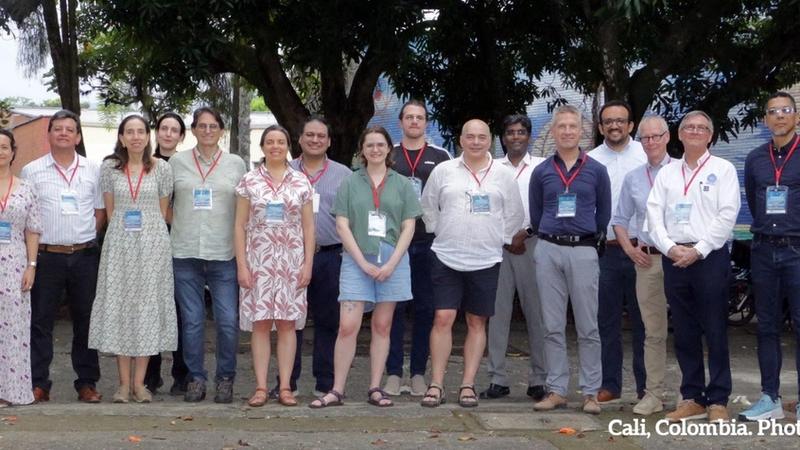
The first COLDEMAR workshop brought together researchers from Universidad del Valle (INCIMAR), the Leibniz Centre for Tropical Marine Research (ZMT), environmental authorities, NGOs, community organizations, and local stakeholders in a two-week journey across Colombia's Pacific and Caribbean coasts. The workshop was designed not only as a scientific meeting, but as an opportunity to collectively build a shared vision for future marine research in Colombia. By combining strategic discussions, field visits, stakeholder engagement, and interdisciplinary planning, participants explored how science can contribute to addressing biodiversity loss, climate change impacts, ecosystem degradation, and socio-economic challenges affecting coastal communities.
Building a Shared Scientific Vision
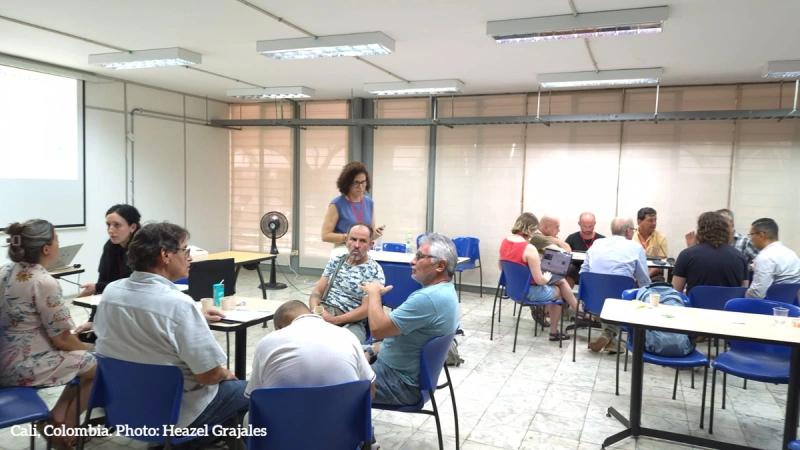
The workshop began in Cali, where participants discussed the future of marine and coastal research in Colombia and examined how COLDEMAR could contribute to strengthening interdisciplinary approaches capable of linking ecological and social dimensions of environmental change. Researchers visited laboratories and research facilities at Universidad del Valle and engaged in discussions on ecosystem connectivity, biodiversity monitoring, fisheries dynamics, hydrology, governance systems, ecosystem services, and climate variability. A central conclusion emerged from these discussions: understanding coastal ecosystems requires moving beyond isolated disciplinary perspectives and adopting integrated socio-ecological approaches that consider both ecological processes and human activities. Participants also developed preliminary concepts for future collaborative projects and identified opportunities for international funding and scientific cooperation.
Connecting Science, Communities and Coastal Ecosystems
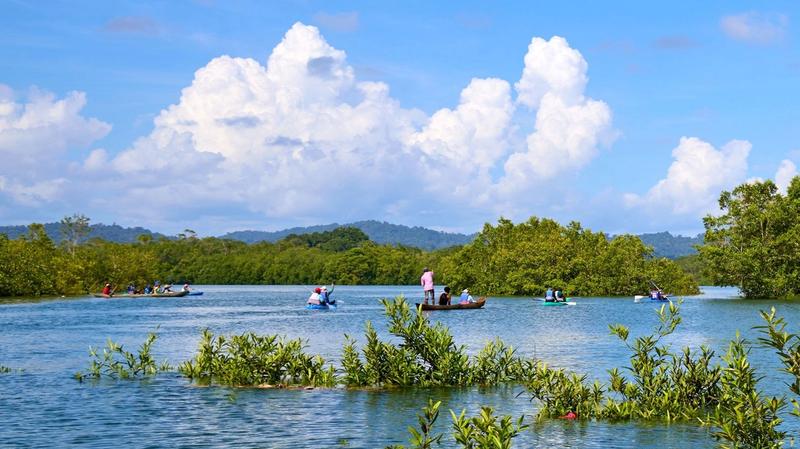
During the field component of the workshop, participants visited Nuquí, in the Gulf of Tribugá, and San Andrés Island in the Seaflower Biosphere Reserve, where they met with local environmental authorities, NGOs, community organizations, fisheries associations, and conservation practitioners. Field visits to mangrove forests, rocky and coral reefs, seagrass beds, and other coastal ecosystems provided first-hand insight into the regions' ecological richness and socio-environmental challenges, including climate variability, tourism pressures, and environmental degradation. Across both locations, participants identified ecosystem connectivity, biodiversity conservation, and community adaptation as key research priorities. The exchanges also highlighted the importance of integrating scientific research with local knowledge and participatory conservation approaches, recognizing local communities as essential partners in knowledge co-production, long-term environmental monitoring, and ecosystem stewardship. Participants further identified opportunities for COLDEMAR to strengthen collaboration among existing initiatives and support interdisciplinary research to inform conservation and management.
Capacity Building: Investing in the Next Generation of Marine Scientists
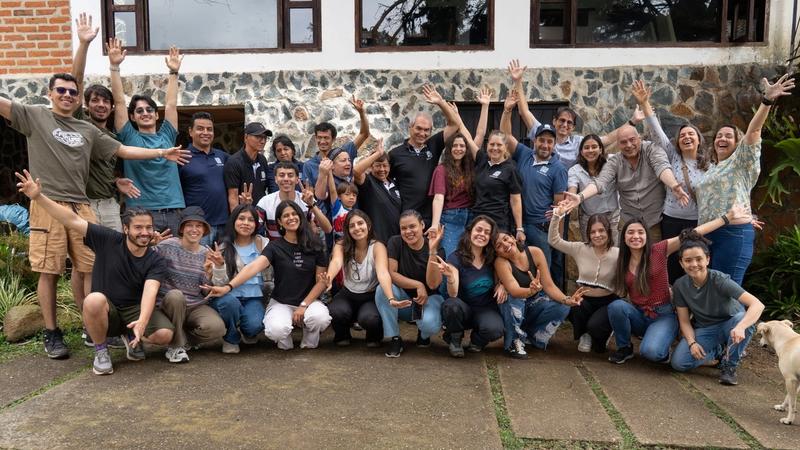
Only a few days after the workshop concluded, COLDEMAR launched its first Early Career training activity: the Mathematical Modelling School for Marine Ecology, Fisheries and Climate. The course gathered 18 early-career researchers (15 Colombian and 3 German) in a rural venue away from the city, creating an immersive environment that encouraged full participation in the week-long programme and fostered scientific exchange. The objective of the school was to strengthen participants' quantitative and analytical skills while introducing them to modelling approaches to understand complex environmental systems.
Throughout the week, ECR received intensive training in: Classical ecological models; Predator-prey dynamics; Plankton ecosystem modelling; Climate modelling; Complex systems analysis; Agent-Based Models (ABMs); and Python-based modelling applications. The course combined lectures, practical exercises, group discussions, and hands-on computer laboratories, allowing participants to directly apply theoretical concepts to real- world ecological and climate-related questions.
From Ideas to Action: Launching the COLDEMAR Pilot Projects Funding Call
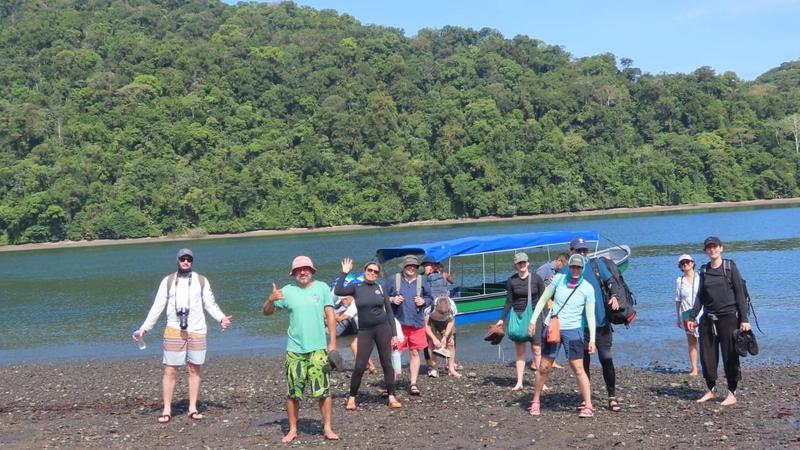
One of the most important outcomes of the workshop was the development of collaborative research ideas. To support their implementation, COLDEMAR launched its first Seed Funding Call for Pilot Projects during the first semester of 2026, prioritizing the Gulf of Tribugá, in the Colombian Pacific. The response from researchers exceeded expectations; a total of ten project proposals were submitted, covering a broad range of scientific topics and reflecting the diversity of expertise within the consortium. Six proposals focused on biogeochemical and ecological processes, including: Carbon dynamics, Ecosystem functioning, Coastal biophysical processes, and Land-sea connectivity. The four remaining proposals focused on socio-economic dimensions, including: Governance systems, Community livelihoods, Environmental justice, Adaptation, and Resilience